Dropshipping platform
Project overview
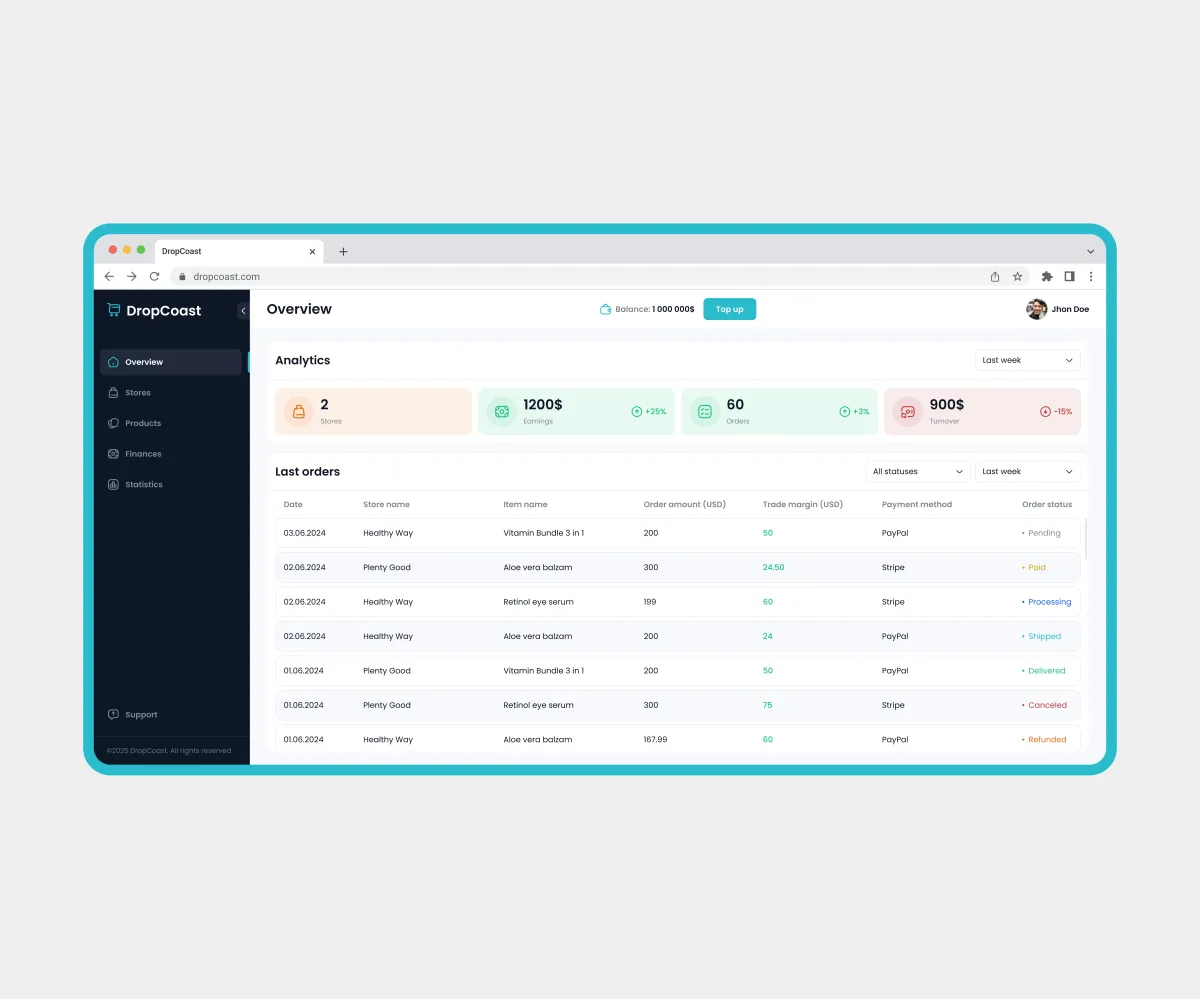
A dropshipping platform for managing multiple stores, with finances, orders, products, and more in one place. AI-powered features automate and speed up both launching a store and managing it day to day.
My collaboration:
Aligned requirements with the Project Manager, worked alongside the second designer on the project, and validated solutions with the Team Lead during design reviews.
Goals
Main task:
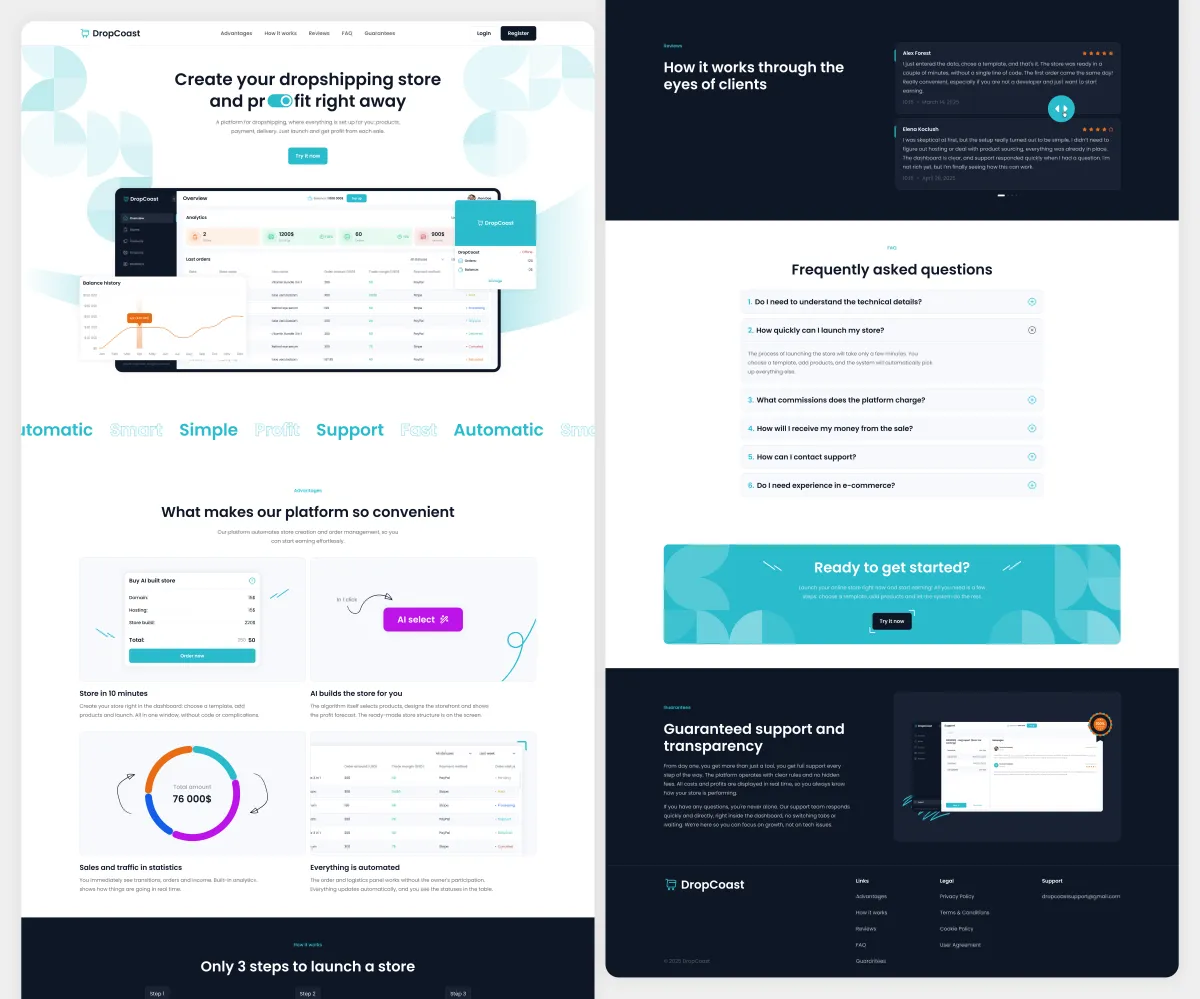
Design the platform based on the provided wireframes, improving its usability without major structural changes. Design the landing page based on the provided structure. Create adaptive versions of all pages and a UI kit.
Challenges:
- Understand the logic and structure of the client’s wireframes;
- Keep the platform and landing page visually consistent;
- Adapt a feature-rich platform for mobile devices.
Constraints:
- The project was fully based on the client’s wireframes;
- All decisions had to follow the approved requirements.
My role
Role:
UX/UI Designer
Key responsibilities:
- Meetings with the Project Manager and Team Lead;
- Visual style;
- Platform sections: Overview, Stores, Finances, Statistics, and Support;
- Landing page and its mobile version;
- Preparing the design file for handoff.
Solution
My design process:
- UX: Interview with the Project Manager, brief analysis, analysis of the client’s wireframes.
- UI: Design concept, internal platform screens, landing page and its adaptive version.
- Handoff: Layer naming, text and color styles.
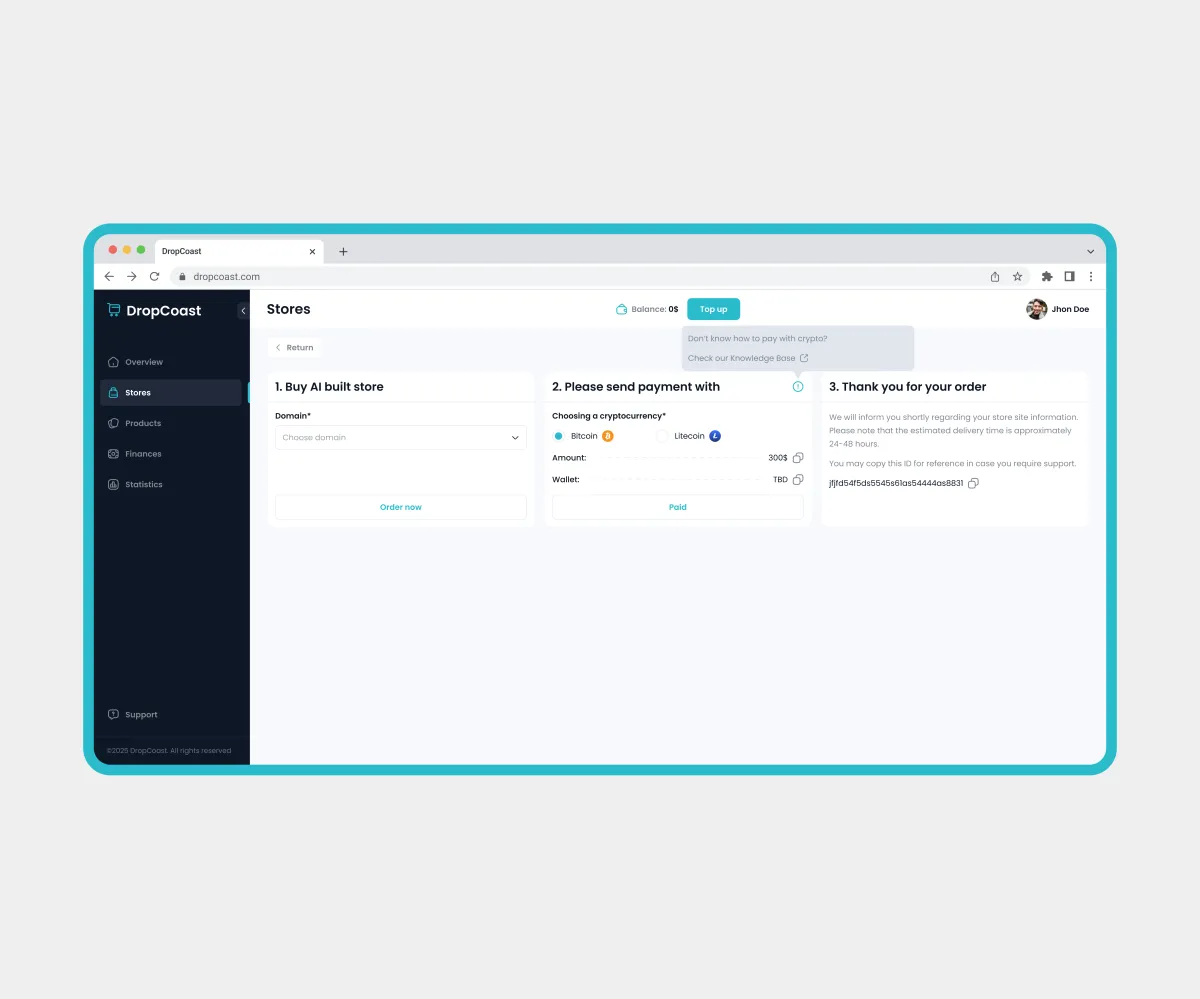
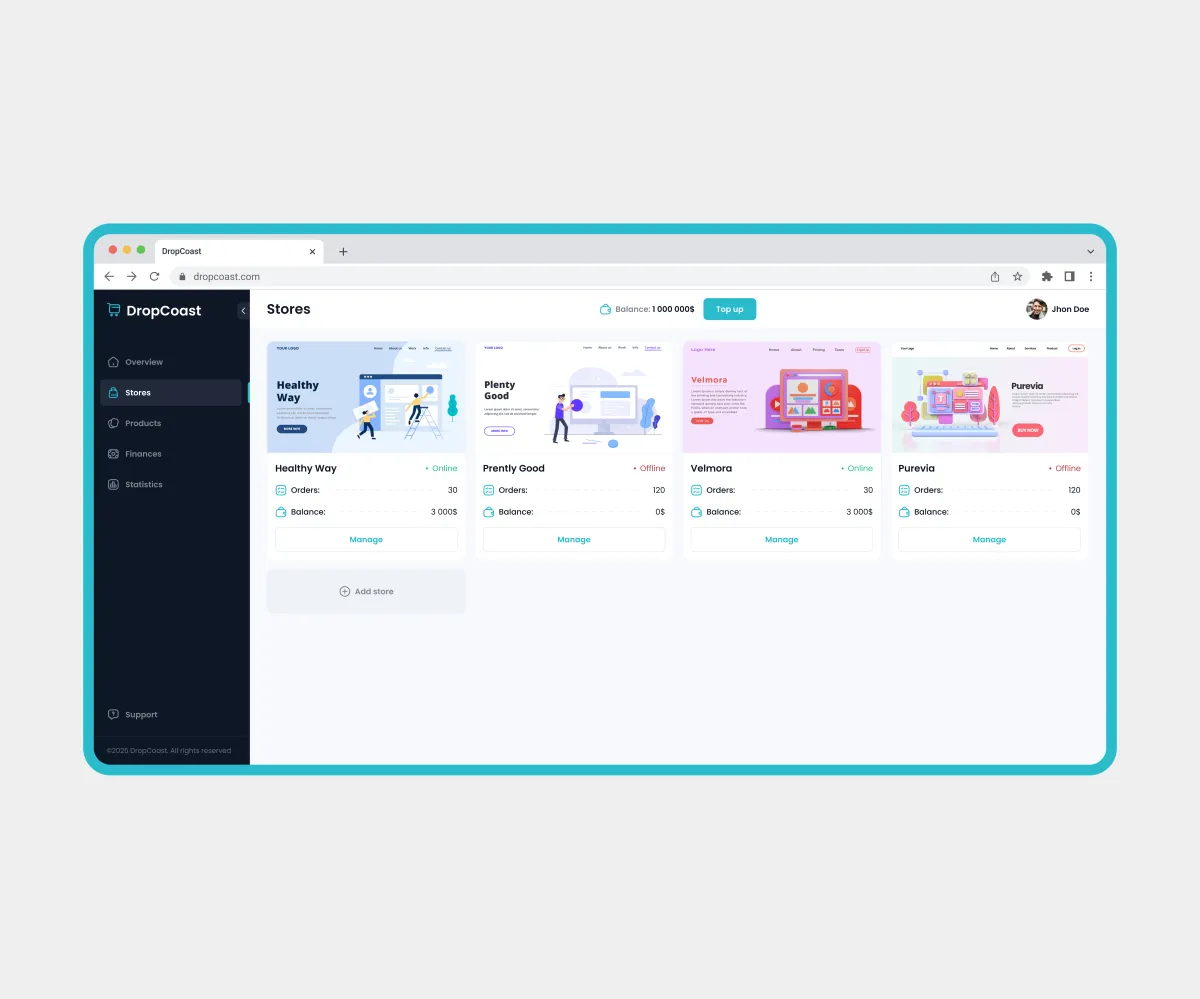
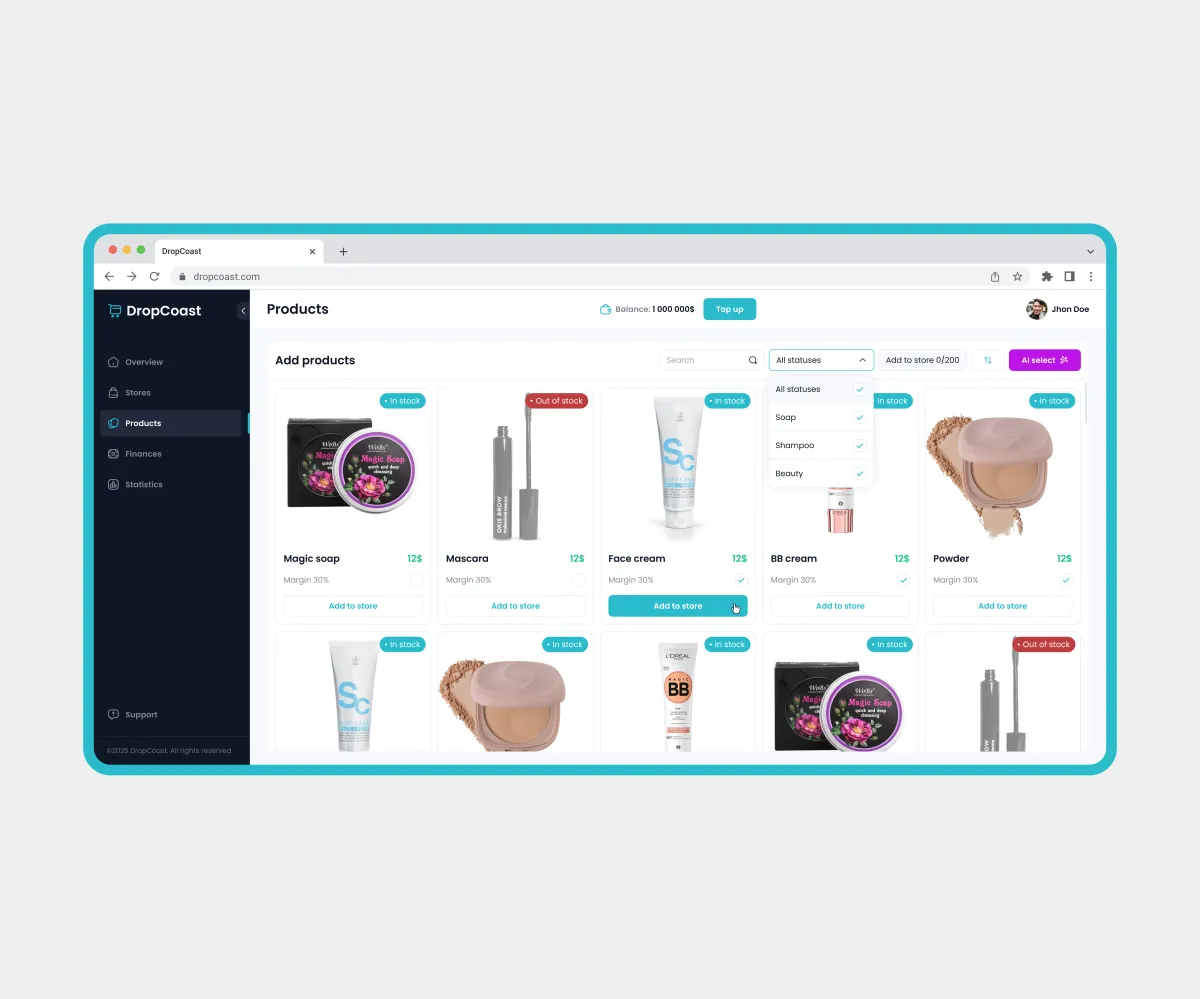
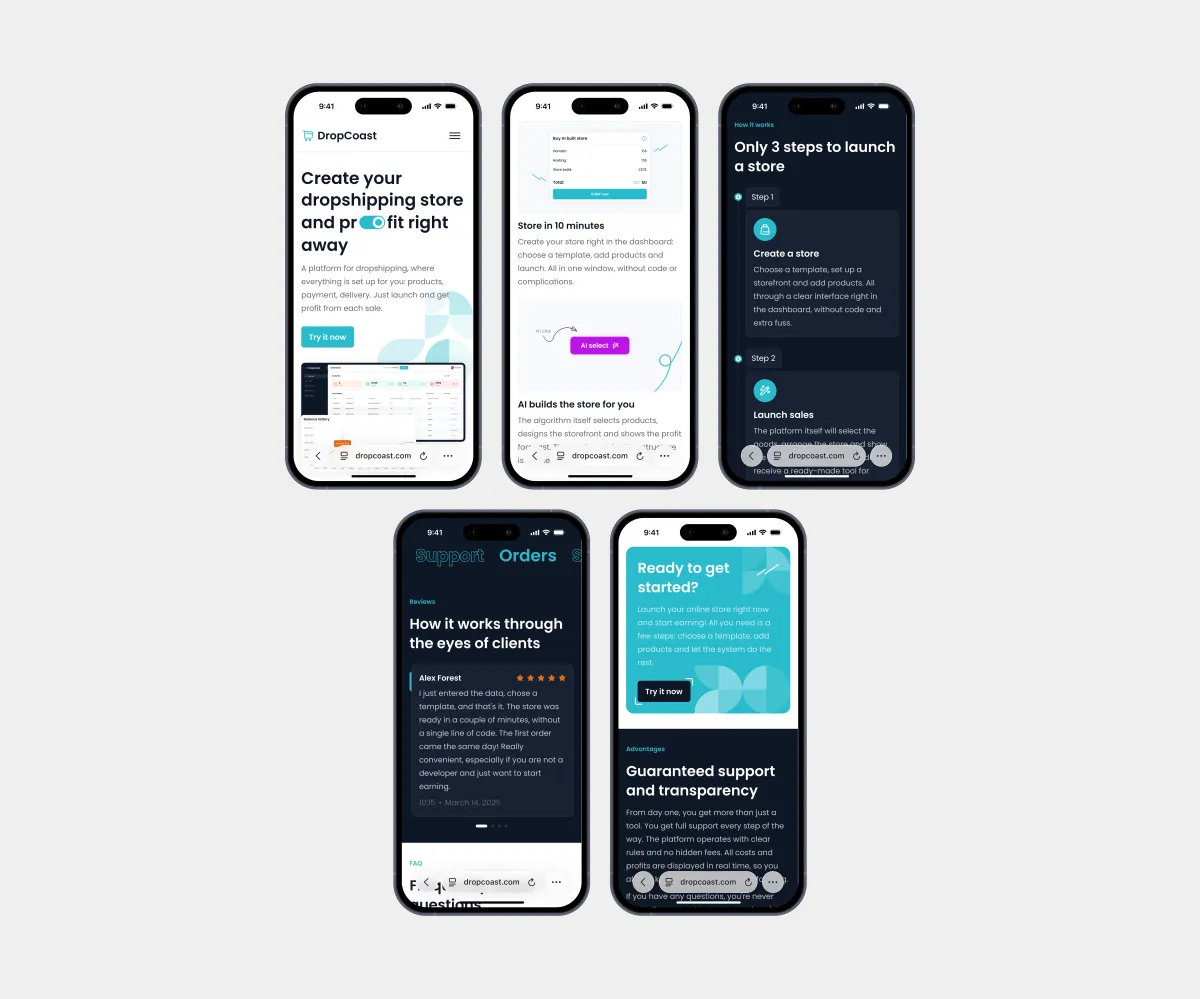
A calm, clean design built around a carefully chosen primary color. It doesn’t compete with semantic colors, so important information stands out without visual overload. A clear layout, typographic hierarchy, and thoughtful use of color make information easy to scan.
Conclusion
Results:
- 84 screens: 42 desktop and 42 mobile layouts;
- Turned a chaotic UX structure into a clear product;
- Simplified key flows without changing the product’s core logic;
- Built a foundation for future scaling and product growth.
What I learned:
- Working with complex and unstructured UX;
- Collaborating effectively with another designer.